One Click, Full Price: The Real Math Behind 'Buy the Bonus' at U.S. Slot Sites
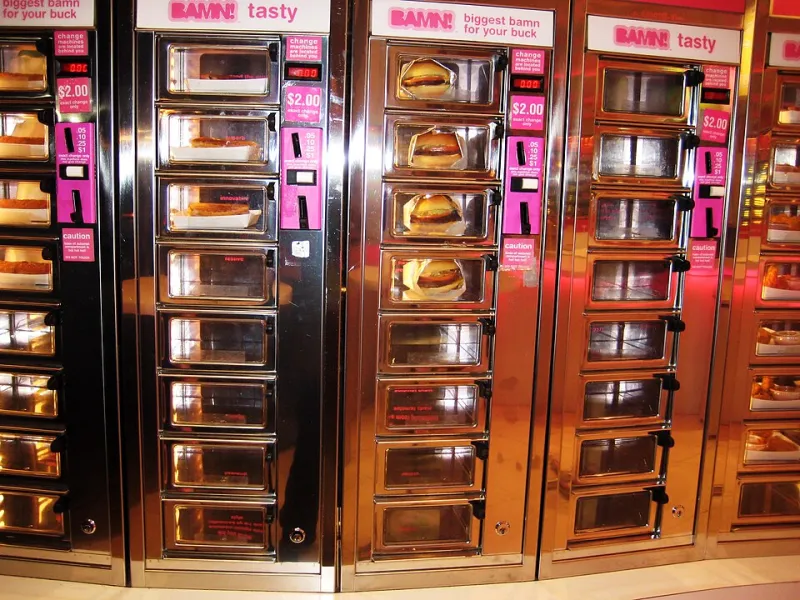
Photo: Brechtbug, CC BY 3.0, via Wikimedia Commons
The buy button is one of the most seductive pieces of interface design in modern slots. No waiting for three scatters. No grinding through dead spins. Just a price, a tap, and a feature that arrives like a pizza. U.S.-facing slot sites have leaned into this hard, and it is easy to see why: a bonus buy feels like a shortcut around the slow part of the game.
It isn't. A bonus buy is a wager with a different shape, not a loophole in the math. The house edge doesn't disappear because the feature starts on demand. It gets concentrated into a single transaction, which means the price you see needs to be audited like any other bet.
The Sticker Price Is Not the Cost
Most bonus buys are priced as a multiple of your base stake. A slot might charge 100x your spin for the feature, so a $1 spin comes with a $100 buy button. Some titles price at 75x, some at 200x, and a few go higher. That multiple is the first number to write down, but it is not the full cost.
The real cost is the expected loss on that transaction. If the buy price is $100 and the feature's long-term return is 96%, the expected return is $96. The expected loss is $4. That $4 is the casino's cut, baked into one click instead of spread across hundreds of spins.
That sounds tiny. It isn't, because of what it replaces. At a $1 base stake with the same 96% RTP, the expected loss per spin is four cents. The $100 buy is therefore equivalent to the expected loss of 100 base-game spins, compressed into a single moment. You haven't avoided the house edge. You've bought 100 spins' worth of it at once.
Price Per Spin Is the Comparison That Travels
Bonus buys get easier to compare when you convert them into a price per feature spin. Suppose a $100 buy awards 10 spins at your current stake. That is $10 per feature spin, not $1. The feature may pay more per spin on average, but the buy price has already repriced the ride.
This is where players get tripped up. They see "10 free spins" and mentally compare it to a 10-spin session at their normal stake. The correct comparison is $100 versus what those 10 spins would cost in the base game, plus the value of the feature's enhanced payout distribution. If the feature's expected return is not meaningfully better than the base game's, you are paying a premium for drama, not for value.
Volatility Is the Hidden Surcharge
Two bonus buys can have identical RTP and wildly different bankroll effects. That is volatility doing its work. A high-volatility feature might pay nothing on most buys and then deliver a large hit on a small fraction of them. A lower-volatility feature might return something more often but cap the upside.
The buy button doesn't change that distribution. It just lets you enter it immediately. If you buy ten times in a row on a high-volatility slot, you are not running ten independent casual sessions. You are running a concentrated sequence of high-variance events, and the chance of a long dry stretch is real. A player who buys once may see a highlight. A player who buys repeatedly is financing the tail.
That is why the buy button can feel generous in clips and brutal in a bankroll. The feature's average payout is doing one thing; the path to that average is doing another.
A Bankroll Framework You Can Actually Use
Before tapping buy, run three quick checks.
First, cap the buy as a percentage of your bankroll. A common conservative rule is 2% to 5% per buy. If a $100 buy represents half your session bankroll, the math is no longer the main problem; the sizing is.
Second, compare the buy price to the base-game stake. If the buy costs 100x your spin, ask whether you would willingly put 100 spins' worth of action on one outcome. If the answer is no, the button is doing marketing work, not math work.
Third, check whether the site discloses the feature's RTP separately. Some jurisdictions require it; others bury it. If the buy feature has a lower RTP than the base game, that difference is a direct surcharge on impatience.
What the Buy Button Should Disclose
A fair bonus-buy label would show the price multiple, the feature's RTP if it differs from the base game, the number of feature spins or the feature format, the maximum win cap, and a plain-language volatility note. That last one matters because "buy the bonus" sounds like a product, but it behaves like a wager.
None of this means bonus buys are automatically bad. For some players, paying for a concentrated feature is the point. The issue is pretending the button is a shortcut around variance or house edge. It isn't. It is a shortcut to the feature, and the price of that shortcut is written in expected loss, not just in dollars.
Treat the buy button like a bet with a visible invoice. If the invoice makes sense for your bankroll, fine. If it only makes sense because the feature looks fun in a clip, close the tab and spin the base game instead.