The Ceiling Isn't a Come-Up: What 15 Slot Max Wins Actually Tell You About Your Bankroll
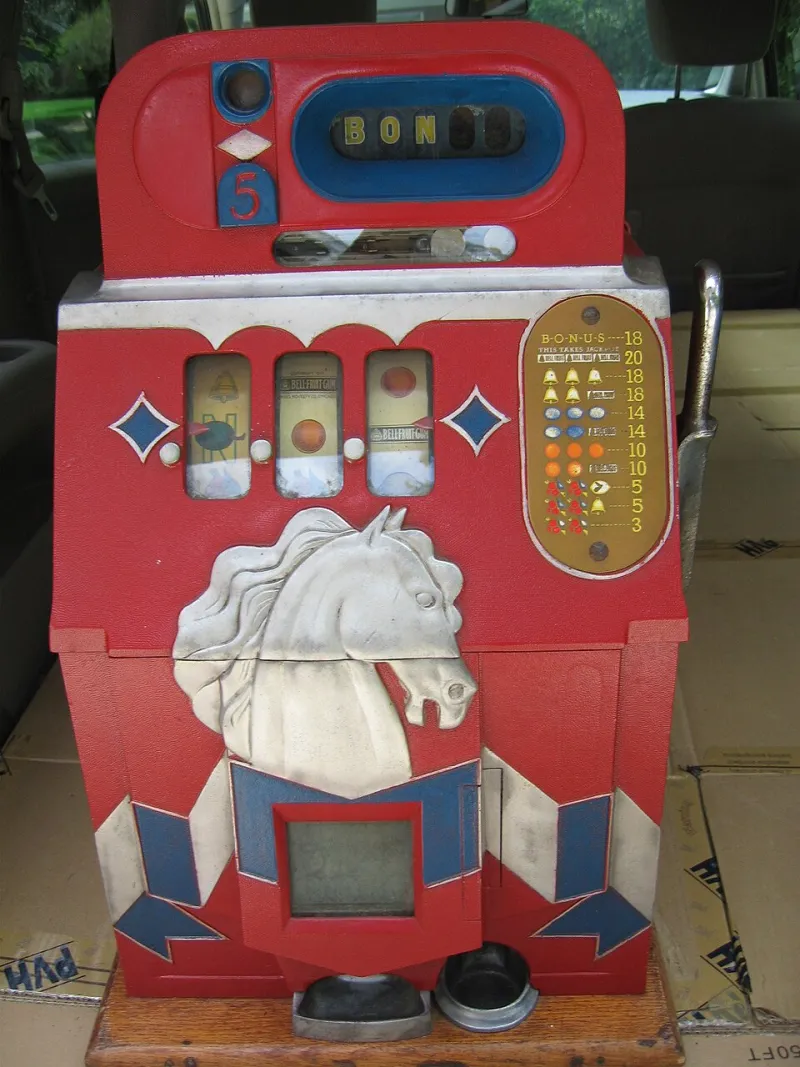
Photo: Gameroom Show, https://www.gameroomshow.com/faq/#Copyright, CC BY-SA 4.0, via Wikimedia Commons
Slot lobbies love a billboard number. Win up to 50,000x your bet sounds like a promise wrapped in neon. But a max win is not a forecast, a hit rate, or a generosity score. It is a fence around the single best outcome the math allows. For this audit, we looked at 15 slots offered in U.S.-facing lobbies and asked a simple question: does a taller ceiling actually mean better odds for the person feeding the machine?
Short answer: not usually. Sometimes the opposite.
What we actually compared
We split the sample into three loose groups: five three-reel-style classics, five five-reel video slots, and five bonus-heavy or Megaways-style titles. For each one, we recorded the advertised max win, whether it was expressed as a multiplier of bet or a fixed credit cap, the bet range, the volatility label, published RTP where available, and any hit-frequency information the paytable or help screen offered.
This was not a lab test. We did not spin enough to prove a jackpot rate, and nobody outside the game server can do that from a demo session. What we could do is read the rules, watch how the cap is triggered, and compare the marketing language against the mechanics. That alone exposed a lot of fog.
A max win is a fence, not a ladder
A cap tells you the top of the payout chart. It does not tell you how often you climb past the middle rungs.
Picture two made-up slots. Slot A advertises a 2,000x max win, medium volatility, and frequent small pays. Slot B advertises 25,000x, high volatility, and most of its payout weight sits in a bonus round that may not show up for hundreds of spins. Slot B has the bigger number. Slot A may still be the friendlier ride for a $100 bankroll.
The ceiling is just the shape of the roof. Volatility and hit frequency tell you how often the house lets you stand under it.
The multiplier trap
One of the most common pieces of sleight of hand is mixing up multiplier caps and fixed-credit caps.
If a slot says the max win is 10,000x your bet, the dollar figure moves with your stake. At 50 cents a spin, that ceiling is $5,000. At $5 a spin, it is $50,000. Same game, same odds, very different bankroll exposure.
If a slot advertises a fixed max win in credits, the opposite can happen. A headline like $1,000,000 max win sounds massive, but if the cap is fixed, the effective multiplier shrinks as your bet rises. Read the help screen before you let a seven-figure number do your thinking for you.
What the 15-slot sample showed
The biggest advertised caps clustered in high-volatility, bonus-buy-friendly titles. The middle caps showed up in standard five-reel video slots. The smallest caps were mostly in low-volatility classics. That is not shocking, but it matters: the ceiling tends to rise with the variance, not with the player-friendly math.
In demo sessions, the highest-cap titles also tended to have longer stretches between meaningful pays. Again, that is not proof of anything on its own. It is a pattern that matches what the volatility labels already suggest. When a game promises a huge top prize, it often pays for that promise with more dead spins, more bonus dependence, or both.
We also noticed how rarely the cap was presented next to a hit frequency. The marketing wants your eye on the ceiling. The paytable wants your eye on the rules. Guess which one is more useful.
How to read a max win without getting played
Here is the practical version.
- Convert the cap to dollars at your actual bet. A 20,000x cap at 50 cents is $10,000. At $2, it is $40,000. Neither number changes the odds, but both change what the win would mean to you.
- Find out what triggers the cap. Is it the base game, a bonus round, a progressive, or a max-bet-only feature? A cap you cannot realistically reach is decoration.
- Compare the cap to the volatility. A huge ceiling on a high-volatility slot is usually a variance story, not a value story.
- Check whether the cap scales with bet. Multiplier caps and fixed caps behave differently as your stake moves.
- Treat the cap as entertainment, not a plan. Your bankroll plan should be built on spin cost, session length, and a loss limit you can live with.
The bankroll math that matters
If you have $100 and spin at 50 cents, you have 200 spins before you are out of bullets. A 10,000x cap would be $5,000, but the probability of hitting that ceiling is tiny by design. The number that actually shapes your session is the house edge and how many times you recycle that $100 through the machine.
At a 96% RTP, the house keeps about 4% of total wagers over the long run. A cap does not change that. Chasing a giant ceiling often means more spins, more wagering, and more expected loss. The max win is the shiny object; the RTP and volatility are the engine.
Bottom line
A bigger max win is not a better deal. It is usually a different risk profile wearing a bigger hat. Read the cap, convert it to dollars, check the trigger, and compare it to the volatility. If the number still looks good after that, fine. Just do not let a ceiling convince you it is a come-up.